Night Thoughts*
*Not to crib the title of Kumail Nanjiani’s fantastic comedy special, but I did write this at 2 A.M.

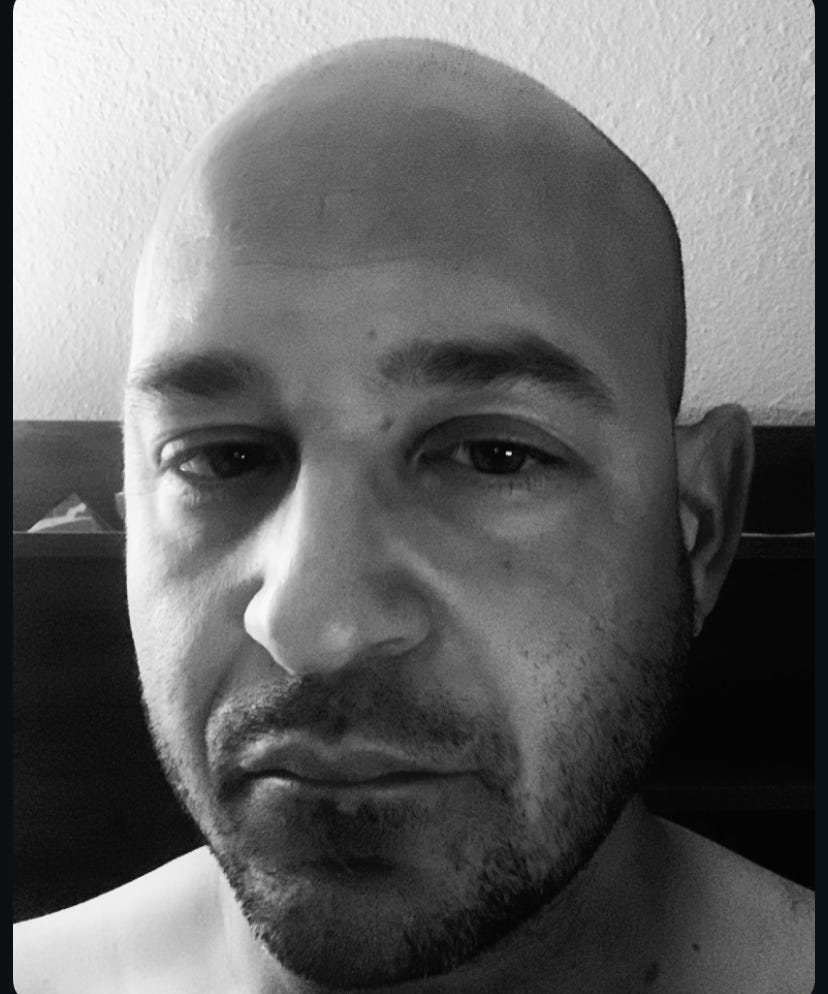
Ruminations on who I am as I turn 42.
As the nerds know, in Hitchhiker’s Guide to the Galaxy, the number 42 is the answer to the question “What is the meaning of life?” and so perhaps this is the year when my own meaning makes sense. Whatever that meaning ultimately is, I think a lot about how much my own perception of the possibilities of that meaning is through the prism of things that have happened to me, rather than things I do. I have said in conversations with friends and therapists that my life is dedicated to service. But the reasons for that feel a bit disempowering.
The first book I wrote, the first publishing house I established, the first play I wrote, all came from me trying to justify my continued existence after friends of mine died young and in tragic circumstances. I often frame to myself that the work I do in the arts and in the community are a tribute to those friends. But this negates my own desire and satisfaction in helping others.Maybe I would have been just as generous, just as committed to creating opportunities to others, maybe I would have been just as compassionate, without losing those people.
A memory that I have clung to throughout my life. When I was 5, maybe 6 years old, my abuelo and I were sitting on the balcony of their house in Fajardo, where I would spend the happiest moments of my childhood, and he said to me, “Jon, you’re a good person.” Maybe the memory is inaccurate, this was decades ago and there is no way I am remembering it exactly as it happened, maybe it was “good boy” “good kid” but the sentiment was the same, and I held onto that memory after his death, which would have been just a few months later. I held onto it because for a long time, it was my only memory of an adult relative expressing a belief in my goodness.
Sure, I was a child, but as a parent, I have found that essential qualities of ourselves are present at the youngest ages. Were you a stubborn toddler? You’ll probably be a stubborn adult. Before the world got its hands on me, I have been told that I was a joyful baby, and even when I’d cry, I would quickly self soothe and start laughing.
So maybe the kindness, the compassion, the wanting to make others smile, was always there. My friend’s deaths created a focus on how to bring light to the lives of others but was not the reason for it.
—----------
I never wanted to be a victim of circumstance. I have strived to take control of my life in spite of my circumstances. Poverty, military service, having children in my early 20s, these were not excuses for avoiding being productive and creative, they were motivators. I wonder if I had taken easier, more lucrative or comfortable routes to my life, would I have accomplished as much as I have? One of the insights into humanity I have discovered in my years as a book editor is how many authors are middle aged men who have never been published, or have only had one or two small things published, and when they describe their lives, they’re pretty privileged. Not a lot of challenges in their lives, and they torture themselves over not having done more artistically, but it seems to me that the self-torment comes from having lived a life largely devoid of real struggle.
There is a destructive propensity of men to need to prove themselves through struggle. The starving artist trope is literally man-made. Prior to the mid-20th century, literacy was almost solely reserved for the elites of society (and in some places, to be literate merely meant you could write your own name). While there were genuinely poor writers in the past, far more were what we now call bohemians–that is, rich people who rebelled against their families in order to live “poor” but could always get money if they needed it, and who were educated and grew up in comfort. The pursuit of poverty is an absolutely stupid idea that only a rich person would do. Nobody born poor wants to be poor, which is not the same as wanting to be exorbitantly wealthy. In fact, poor people often find value in things other than money, unlike rich people, who are so detached from humanity they think they have to starve in order to feel something in their dead souls.
I’m not saying all of these deranged rich people are men, but most of them are. And the attitudes of these morons have infected the arts world with ideas like the Starving Artist. Needless to say, these are also White attitudes. The Black and Brown people of the Global South are raised to be resourceful, innovative, to be persistent and to overcome obstacles, because our lives are built on those obstacles. Yet in the United States, Black and Brown people who should know better also subscribe to the idea of the Starving Artist. After all, the White man told us that artists struggle. The narrative of killing yourself for your art was created by people with thin skin who couldn’t handle the pressures of the system they forced on the rest of us, but now the victims of that system have taken on the same narrative. The difference is that we people of Global South have the strength to endure starving for our art, but the reality is that we shouldn’t have to.
We have adopted the narrative of people we outwardly hate and internally envy. If you protest white supremacy, why are you living white supremacist values? Have you benefitted from them aside from cursory moments of acceptance by the white establishment? And given the depravity and injustice that colonialism and racism have wrought upon our communities, why are you working so hard to be accepted by the people who made you hate yourself in the first place?
I have thought a lot in recent months about the Oscar-run for the movie Sinners, my favorite film of 2025. Ryan Coogler was honored by the NAACP Awards, rightfully so, and during his speech he proclaimed how much he loves being Black. The great comedian Godfrey then made a video online asking the fundamental question–Why do Black people value a white institution like the Oscars? Why doesn’t the Black community value the NAACP awards more than the Academy Awards?
This then made me think of how, in 2019, when the classic film Parasite was on the awards circuit and became the most Academy Award-nominated Korean film ever (and eventually would be the first foreign language film to win Best Picture), the director Bong Joon-ho was asked how he felt about the Oscars recognizing his film and gave the ice cold response of, “The Oscars are not an international film festival. They’re very local.”
His statement scandalized many of those in the American media, how dare this filmmaker remind us that there are 8 billion people in the world and only 300 million Americans? How dare he expose the bubble of the American narrative that disregards the vast majority of humanity? Yet within that bubble are oppressed people of color whose greatest oppression is their inability to imagine a world without the United States. We treat these narratives as though they are global, universal truths, rather than white American propaganda.
—---
What does this say about me? The greatest definition of my life is being defined by others, even in a positive sense. What is positive or negative about my life has largely been told to me, rather than what I truly believe those positive and negative things are. What is the meaning of my life, and has that meaning been devalued by the narratives that have both shaped and distorted it? Can I ever really know who I am? Can anyone?
—----------------
My most recent play, Pitiyanki, has been on my mind, almost to the point that I’m sick of it, which isn’t great because I’m embarking on what could be a couple of years of getting this story produced and therefore, talking about it ad nauseum. But also, I love it. I think as a work of art, it expresses some of my biggest concerns about the state of the world in a compelling story with some of my favorite characters. Even as I might be ready to move on to the next thing, there is just so much still to say about this world I’ve created.
It occurred to me a couple of hours ago, just before I started writing this (again, at 2am, because for some stupid reason I went to bed at 8pm last night), that a central theme is how people act in a moment of crisis, and how that reaction reveals their true character. We can define ourselves in any number of ways, through politics, cultural identity, racial identity, sexuality, etc. but when things start burning down and shots are being literally figuratively fired, who is the you that shows up?
How have I shown up? Time and again, I run toward the problem. I seek solutions. I provide comfort. I have been brave at many times when others would be cowardly. I have endured enormous pressure and made it through the other side still cracking jokes.
I have held onto many narratives in my life, especially the negative ones impressed upon me. I was contacted by someone yesterday who I used to think loved me, and they made an assumption about me that was common during our relationship–that I must be struggling so maybe I couldn’t do something they needed me to do. When I told them that I’m actually doing pretty well and would be able to do this thing for them, they were clearly caught off guard, and proceeded to praise me.
And in another time, I would have been flattered, and maybe felt like I accomplished something by getting their recognition. This time, however, I reminded myself that the praise didn’t come naturally, it was a reaction to my dispelling of their narrative. The narrative they were using when they reached out to me is how they actually thought of me, and in a moment of clarity, I could see how this narrative couldn’t live up to the reality of me.
The narrative that does live up to the me who has shown up in hard times is that moment at my abuelo’s house in Puerto Rico, when my abuelo insisted that I am a good person. Maybe that is the most meaningful thing my life could be.